Investor insight
What are the risks of investing in new build property in New Zealand?
New builds come with a fresh look and a developer's price list. For anyone lending against one, the questions that matter are different: what is it worth to a buyer next year, and who stands behind the building?

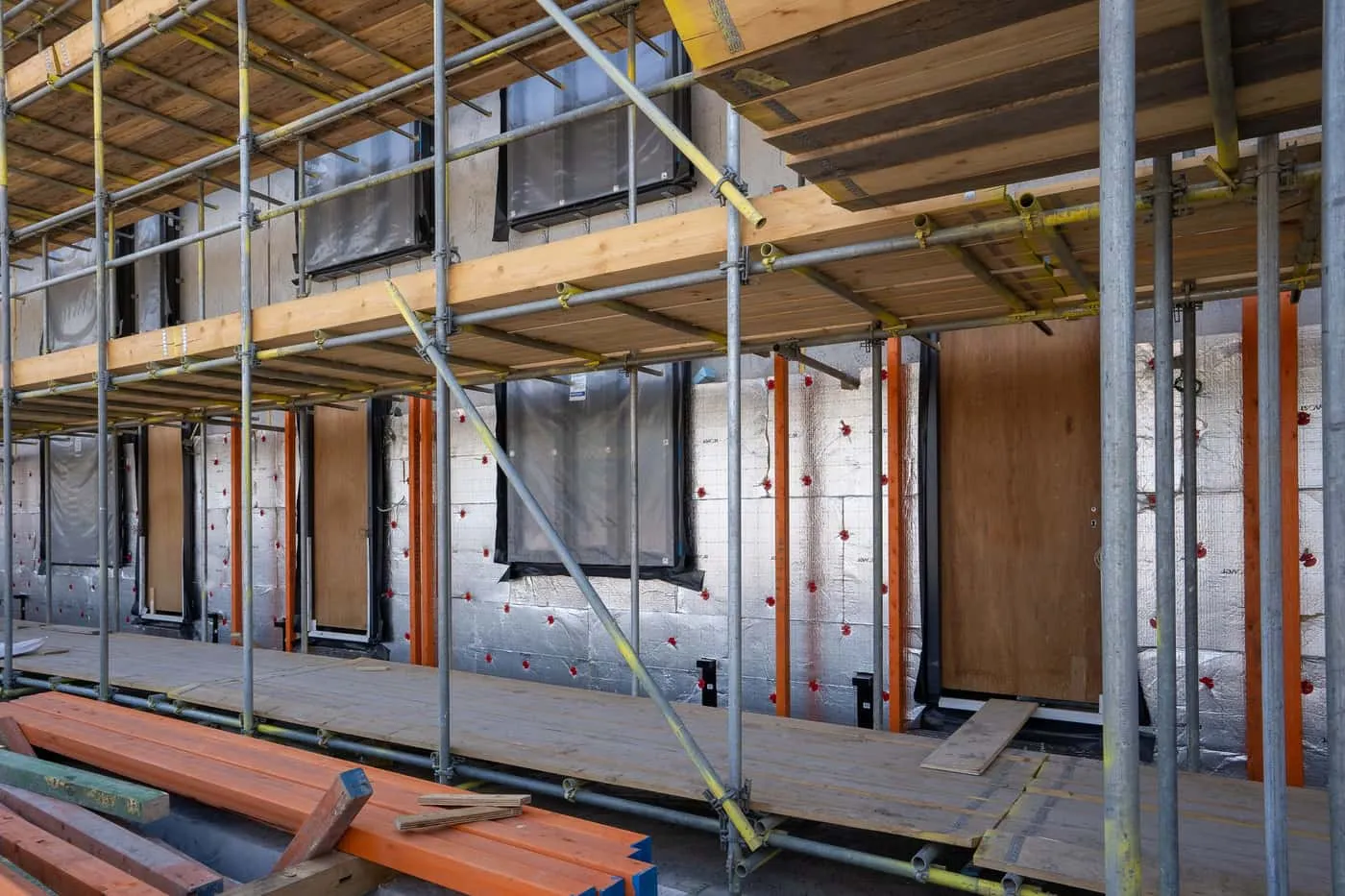
The biggest risk of investing in new build property in New Zealand is the gap between what you pay and what a valuer says the finished property is worth, followed by completion delays, defects that appear after handover, and a glut of similar units. A lender faces the same risks, but sees them through one lens: will a buyer pay enough to repay the loan?
HomeSec Business Finance, a private business lender lending since 2004, with its New Zealand office in Auckland, invites co-funders into individual loans secured by registered mortgages. This insight walks through new build risk from the lender’s chair, because that is the chair our readers sit in.
Why is a new build valued differently from an established home?
A new build is priced by a developer working back from costs and margin, while an established home is priced by what similar homes recently sold for. The first number is a hope; the second is evidence. A lender cares about the second, because a mortgagee sale is the end of the road if things go wrong.
For a first buyer, a contract price at the top of the range feels fine while the market is rising. When the market is flat or falling, the new unit has to compete with established listings and with the developer’s own unsold stock. Between late 2021 and mid-2023 the Reserve Bank recorded house prices falling around 14 percent over 18 months before they stabilised. Cotality put national values 18.2% below their peak in August 2026. Anyone who bought at a peak-priced new build in 2021 has lived the valuation gap.
A premium for “new” tends to be the first part of a price to disappear. That is not a reason to avoid new builds as a category. It is the reason an investor should price the risk in.
What are the main new build risks, and who carries them?
The main risks are valuation shortfall, completion and developer risk, defects, and oversupply. For an owner, each lands on equity. For a lender secured by a first mortgage, each reduces the cushion between the loan and the sale price.
| Risk | What goes wrong | Who feels it first |
|---|---|---|
| Valuation shortfall | Valuer’s figure comes in below the contract price | The buyer, who funds the gap |
| Completion and developer risk | Project delays, cost blowouts, or the developer fails before handover | Off the plan buyers; deposit holders |
| Defects and weathertightness | Faults show up after handover, often years later | The owner, then whoever holds the property as security |
| Oversupply | Many near-identical units listed at once | Anyone who must sell within a set time |
| Body corporate costs | Levies, repairs and building-wide issues on apartments | Owners of units; it shows up in what buyers will pay |
The same table applies to a lender, only with a different tail. A lender doesn’t carry the shortfall unless the sale price falls below the loan, so the lender’s job is to make sure that cushion is wide.
How does valuation versus contract price actually play out?
On settlement day, the buyer’s lender sends a registered valuer, and the figure that comes back decides how much that lender will advance. If the valuation is under the contract price, the buyer must bring the extra cash, or the sale can fall over. This is the mechanism behind most “new build valuation shortfall” stories.
Here is the sequence a careful lender follows:
- Ask for the valuation, not the contract. Look for a registered valuer’s report dated recently, on an “as is” basis for completed property.
- Check the comparables. Are they sales of established homes nearby, or only other units in the same development?
- Compare the valuation to the price paid. A large gap is a signal about both the property and the borrower’s position.
- Size the loan to the valuation. The loan-to-value ratio (LVR) is measured against the valuer’s figure, not the price. LVR explained for mortgage investors covers the arithmetic.
- Read how quickly it would sell. Ask how long comparable properties took to sell.
Illustrative example: a townhouse sells for $780,000 on the contract, but a valuer says $720,000. A loan at 80% of the price would be $624,000, which is 86.7% of the value, already above a normal ceiling. The same loan sized to the valuation is $576,000. The loan is not the problem; the denominator is.
What does the Building Act 2004 mean for a lender?
The Building Act 2004 gives the council the job of issuing a code compliance certificate once it is satisfied, on reasonable grounds, that consented work complies with the building consent. For a lender, that certificate is the cleanest evidence that the building was inspected and passed. Without it, insurance, resale and security can all be harder.
Practical points when you read a pack for a recently built property:
- Ask whether the code compliance certificate has been issued, and when.
- Check that the building consent matches what was actually built, including any later additions.
- Look at who built it and whether the builder is still trading.
- Remember that the Act limits civil claims for building work to 10 years from the act or omission in question. Defects that surface late can fall outside that window.
That last point is worth knowing because the old “leaky building” era showed how long weathertightness problems can take to emerge. It also showed who ended up paying when the original builders were gone.
Is the liability and warranty picture changing for new builds?
Yes, but not yet. A Building Amendment Bill introduced to Parliament in mid-2026 proposes to replace joint and several liability with proportionate liability, and to bring in mandatory home warranties for new residential buildings up to three storeys. At the time of writing it is before a select committee and is not law.
DLA Piper’s summary from February 2026 describes the proposals: a one-year defects cover and a 10-year structural warranty, applying to restricted building work, and a cost to the builder it estimated at typically less than 0.5% of the build. Under joint and several liability today, if a negligent builder is liquidated, councils are often left as the last party standing. Under proportionate liability, each party pays only for its own share, so there may be less money to recover from anyone.
For a lender or investor, the practical takeaways:
- Don’t price a property as though a warranty exists. Wait for the law, and then check whether a particular build is covered.
- Remember proposals can change before they pass. Check the current bill on legislation.govt.nz before relying on any detail here.
- Whatever happens, the best protection remains the one you control: a conservative LVR against a current valuation.
Is lending against a new build different from owning one?
Yes. An owner holds the equity, which takes the first loss if prices fall. A lender sits behind that equity: the property can lose value up to the amount of the owner’s cushion before the loan is touched. That is what a registered mortgage over a property at a sensible LVR is for.
Compare the two positions:
| Owning a new build | Lending against one | |
|---|---|---|
| Exposure to price falls | Full | Only after the owner’s equity is used up |
| Exposure to defects | Direct | Indirect, through the property’s value |
| Return | Rent and capital growth, with vacancy and costs | Interest on the loan, fixed by the loan agreement |
| Control over exit | Sell when you choose | Repaid at maturity, or enforced through a mortgagee sale |
For the landlord side of that comparison, see mortgage investment versus rental property.
The cushion is not unlimited. A mortgagee sale under the Property Law Act 2007 must follow a process that includes a default notice giving at least 20 working days to remedy, and a duty to take reasonable care to obtain the best price reasonably obtainable. It takes months, and a thin market for similar units can lengthen it. What happens if a borrower defaults sets out the steps.
One more fact helps explain why private lenders are active here: the Reserve Bank’s debt-to-income rules apply to bank lending only, and bank appetite for some property types shifts with the cycle. That shows up as more borrowers looking for other sources of funds. It does not change the need to check each security on its merits.
Which new build features should make an investor more cautious?
Caution is justified where the property is hard to value, hard to sell, or hard to inspect. Apartments in large developments, off the plan purchases, units that depend on one developer’s reputation, and properties with no code compliance certificate all need extra evidence before a lender relies on them.
A short checklist:
- Apartments in big complexes: body corporate accounts, long-term maintenance plan, sinking fund, any disputes.
- Off the plan: does the borrower own a finished, titled property, or only a contract to buy one?
- Single-developer areas: how many identical units are for sale, and at what discount?
- No certificate: treat as unresolved until the council issues it.
- Nearby sales: recent settled sales of comparable properties, not asking prices.
Our own approach is deliberately narrow. Our lending rules keep to straightforward loans over existing property, with no construction and no development, and the lending rules and each loan’s pack show you what sits behind the loan so you can say yes or no. The due diligence pack guide lists what to look for.
Want to see how a secured loan pack deals with these questions?
If you’d like to see how a real loan pack handles valuation, ranking and exit before deciding anything, you can ask to see an example by registering your interest. The loans you choose pay within the range of 12% to 18% p.a., set loan by loan and shown in each pack.
We assess every loan against a 50-point due diligence checklist before it reaches you, and HomeSec’s own money sits in the same loan. For the property market backdrop, see the New Zealand property market.
Ready to look at secured loans over existing property?
Property at the new end of the market asks you to take a developer’s word on price, a builder’s word on quality and a warranty scheme that is still being written. A loan secured over existing property at a sensible LVR asks a simpler question: what would a buyer pay today? That is the question we build each pack around.
Registering takes about a minute and doesn’t involve a credit check, because you are the one lending, not borrowing. Your details come to us and are not passed around a list of other providers. A real person on our team will read what you are looking for and call you to talk it through. Please fill the form in accurately, including your investor category and the sum you have in mind, so the first packs we send suit you. Say yes to any loan one at a time, or none at all.
Frequently asked questions
What are the main risks of investing in a new build in New Zealand?
The main risks are paying more than the finished property will be valued at, delays or developer failure before completion, building defects that surface after handover, and thin resale demand when many similar units reach the market together. Apartments and townhouse developments tend to carry the last risk more than a single standalone house.
Why do new builds sometimes value below the contract price?
A contract price can include the developer's margin, marketing costs and a premium for being first to buy. A registered valuer looks at what comparable properties actually sold for. When the two differ, the buyer has to fund the shortfall, which is why a lender relies on the valuation and not the price paid.
What is a code compliance certificate and why does it matter?
A code compliance certificate is issued by the council under the Building Act 2004 once it is satisfied, on reasonable grounds, that consented work complies with the building consent. Without one, a property can be hard to insure, sell or use as security, so a lender should ask to see it.
Are off the plan apartments riskier than standalone new builds?
Usually, yes. Off the plan buyers commit years before settlement, the project may change or stall, and many near-identical units can hit the market at once. Apartments also share common property and body corporate costs, which a buyer weighs in the price. A lender looks hard at both the valuation and how easily the unit would sell.
Is lending against a new build safer than owning one?
It can be, but only if the loan is sized properly. A lender ranks ahead of the owner's equity, so the property can fall in value before the loan is hit. That protection depends on the LVR and a current registered valuation. A high LVR on an over-priced new build removes most of it.
Does HomeSec lend against new builds or developments?
HomeSec's lending rules keep to straightforward business loans over existing property, with no construction and no development. Each loan pack sets out the property, the borrower, the LVR, the term and the exit so you can judge it. The full rules are on our lending rules page.
Sources
- Building Act 2004 — code compliance certificates and limitation period
- Property Law Act 2007 — mortgagee remedies and sale
- RBNZ — Update on the housing market (Financial Stability Report special topic, November 2024)
- RBNZ — Debt-to-income explainer (applies to bank lending only)
- DLA Piper — Who pays when buildings fail? Proposed liability changes and new homeowner protections (4 Feb 2026)
Figures are as at 15 November 2026 unless stated. This page is reviewed by Jason Brockmuller, Joint CEO of HomeSec Business Finance, and updated as markets change.